I'll through in those tid bits.
The SNES's "Slowmo" funtion was an effect of the CPU it used. A 16bit version of the 6502.
The Genesis/Mega Drive's ablity to play Sega Master System, was thanks to the z80 chip it used for the audio processing. The z80 was used as the main CPU for the SMS.
The Sega CD was the only 16bit system capible of full-motion video. This could only handle resolutions up to 240 x 320, but a big thing at the time. There were only two games that took full advantage of this, Sewer Sharks and the Adventures of Willy Beamish, there were music video creation games that used this too.
* Note I dont consider the music video creating video games as true video games.
The game Virtual Fighter that first debued on Sega's 32X was what brought true 3D fighting games into perspective, before then they were looked at as impractical and looking bad.
Playstion and Saturn marked the point that consoles could be the center of a family's entertainment center. They both offered a video card, this card aloud the system to decode Mpeg1 video. VCDs became very popular at the time. The Saturn used this with the Lunar RPG to give the best video quality out of the versions released. The Dreamcast supported Mpeg1 decoding natively.
The Dreamcast was the last effort done by Sega to say in the hardware section of the gaming indestry. The system incorperated an easy to program hardware design, cheap Dev systems, high ram video graphics, and a perpritary disc. The GD-rom was really two discs in one. It saved all video the game used in the center 50 megabits and the remaining 950 megabits outside the video portion.
Sony used a custom built CPU that integrated vector plotting core for the PS2. This was also built around the same architecture as the MIPS CPU the Playstation used. However it operated at a 128bit clock cycles compared to the 32/64bit on the Nintedo GameCube, 64bit on the Dreamcast and 32bit on the Xbox.
Thats it.
Video Game Historians
Moderator: Moderators
-
nos_slived
- Higher Idiot
- Posts: 3476
- Joined: Mon Mar 21, 2005 6:32 pm
- Location: Burnaby, BC, Canada
- Contact:
You made some mistakes with the GD-ROM. It was capable of storing about 1.2GB, not 125MB. It contained 3 sections, not 2, however the center track was the smallest, and usually contained nothing except for the text "Produced by or under license from SEGA Enterprises LTD Trademark SEGA". The first section was small and had audio/DC identifier and sometimes some files for use on a computer. The outer, much larger portion contained the game data. It can also be used for the NAOMI and Chihiro, 2 of Sega's arcade systems.
I also know that Nintendo used the lockout chip in the NES to avoid another gaming crash like that which occured in the Atari era. Tengen, a 3rd party game company attempted to reverse engineer the technology, but failed, so they illegally *borrowed* the documentation from the US Copyright office. With these documents they successfully created a work around called the 'rabbit' chip. Nintendo found out, and sued Tengen for copyright infringement. Nintendo won (obviously). Color Dreams, Wisdom Tree, and Camerica all worked on the idea of stunning the lockout chip with a negative voltage spike. This was rather effective until Nintendo discovered the problem and began using some 1K ohm resistors in series with the 2 lines used for stunning the chip, and some diodes on the power and ground lines. AVE finally started handing out instructions with their games, detailing how to cut pin 4 of the lockout chip, which was effective for disabling the chip.
I also know that Nintendo used the lockout chip in the NES to avoid another gaming crash like that which occured in the Atari era. Tengen, a 3rd party game company attempted to reverse engineer the technology, but failed, so they illegally *borrowed* the documentation from the US Copyright office. With these documents they successfully created a work around called the 'rabbit' chip. Nintendo found out, and sued Tengen for copyright infringement. Nintendo won (obviously). Color Dreams, Wisdom Tree, and Camerica all worked on the idea of stunning the lockout chip with a negative voltage spike. This was rather effective until Nintendo discovered the problem and began using some 1K ohm resistors in series with the 2 lines used for stunning the chip, and some diodes on the power and ground lines. AVE finally started handing out instructions with their games, detailing how to cut pin 4 of the lockout chip, which was effective for disabling the chip.

-
kidw/32+systems
- Posts: 708
- Joined: Thu Mar 17, 2005 4:20 pm
- Location: Clevelandish,OH

I beat Super Mario World (SNES) in 12 minutes 30-something seconds.
<a href="http://profile.mygamercard.net/soundwave348">
<img src="http://card.mygamercard.net/gel/soundwave348.png">
</a>
<img src="http://card.mygamercard.net/gel/soundwave348.png">
</a>
-
demonofaj
- Portablizer Extraordinaire
- Posts: 2553
- Joined: Tue Jun 21, 2005 2:52 pm
- PSN Username: ajsen1gma
- Steam ID: demonofaj
- Location: NYC (718)
- Contact:
I beat SMB for NES in 15 minutes once. This is my trick.
First in level two, WARP to greatest world.
Then in that world, with the underground level, warp-ity again.
Then just ignore EVERYTHING, RLH, kill bowser by jump following him, and competed!
First in level two, WARP to greatest world.
Then in that world, with the underground level, warp-ity again.
Then just ignore EVERYTHING, RLH, kill bowser by jump following him, and competed!
"Life's a female of the dog species, then you die.."
-
Turbo Tax 1.0
- Portablizer Extraordinaire
- Posts: 4773
- Joined: Wed Mar 30, 2005 6:19 pm
- Location: Delaware, no sales tax
- Contact:

I've beaten the GBA release of SMB2, a few times, havent played it in so long (it was my first GBA game back in 2000 or something).
<a href="http://profile.mygamercard.net/soundwave348">
<img src="http://card.mygamercard.net/gel/soundwave348.png">
</a>
<img src="http://card.mygamercard.net/gel/soundwave348.png">
</a>
-
cowsgoquack101
- Senior Member
- Posts: 1981
- Joined: Thu Aug 04, 2005 9:21 am
- Steam ID: cowsgoquack101
- Location: Cold, grey Indiana!
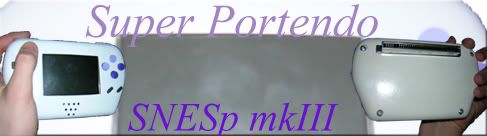
Yes, I would also like to see the new portable. The suspense is killing me. I hope to see a cool new portable from Mr. Heckendorn.
But back on topic...
1. The Magnavox Oddysey was first manufactured in Fort Wayne, Indiana(very close to where I live like 15 miles away) and was made by designer of video games that we all enjoy, the man Ralph Baer. Atari had to pay Magnavox a ton of money because of the table top tennis lisence aka PONG. The Magnavox Oddysey contained a blockier form of Pong on their system which I own.
But back on topic...
1. The Magnavox Oddysey was first manufactured in Fort Wayne, Indiana(very close to where I live like 15 miles away) and was made by designer of video games that we all enjoy, the man Ralph Baer. Atari had to pay Magnavox a ton of money because of the table top tennis lisence aka PONG. The Magnavox Oddysey contained a blockier form of Pong on their system which I own.
-
nos_slived
- Higher Idiot
- Posts: 3476
- Joined: Mon Mar 21, 2005 6:32 pm
- Location: Burnaby, BC, Canada
- Contact:
-
Triton
- Moderator
- Posts: 7398
- Joined: Mon May 24, 2004 12:33 pm
- 360 GamerTag: triton199
- Steam ID: triton199
- Location: Iowa
- Contact:
i ahve one up on all of you , the original twin galaxies arcade was in my home nearby city of ottumwa. home of the first arcade game olympics in 1982? lol über!
Visit us at Portablesofdoom.org
-
MilkMonster
- Posts: 470
- Joined: Sat Aug 06, 2005 2:52 pm
- Location: A stupid place in NC